What Is a Microinverter? Microinverter or String Inverter?
Microinverters and string inverters convert the direct current generated by solar panels into usable alternating current; the difference lies in where this conversion takes place and how many panels it serves. The right choice depends not only on the price of the device, but also on roof orientation, shading, panel count, monitoring expectations, and future energy storage plans.
Short answer: Because a microinverter operates at the level of a panel or a small group of panels, it provides flexibility on small roofs that face different directions and experience partial shading. A string inverter manages panels with similar conditions as a string, offering a simpler, centralized, and generally more economical architecture on large, uniform roofs. There is no absolute winner for every project.
What Is a Microinverter and How Does It Work?
A microinverter is a small power converter installed behind or near a solar panel. It converts the DC electricity from the panel into AC electricity on the roof. A microinverter may manage a single panel or provide inputs for multiple panels, depending on the product design.
Independent maximum power point tracking (MPPT) for each input or panel helps panels under different irradiance conditions affect one another less. For example, if one panel is shaded by a chimney in the morning while another receives sunlight, the independent MPPT architecture helps the sunlit panel continue producing at its own operating point.
1. The panel generates power
Each panel generates DC electricity according to the irradiance it receives.
2. Conversion occurs at the panel
The microinverter converts DC electricity into AC electricity at panel level.
3. The AC lines are combined
The AC outputs of the microinverters are combined through an appropriate protection and connection arrangement.
The TommaTech Micro S 800W Single-Phase Inverter in CW Enerji's verified product range is an example of a microinverter for small-scale applications, with two independent MPPTs, two string inputs, remote monitoring, an IP67 protection rating, and single-phase AC output. Technical suitability must also be verified against the electrical values of the connected panel and the project conditions.
What Is a String Inverter and How Does It Work?
In a string inverter architecture, multiple panels are connected in series to form a panel array, or “string.” DC electricity from the string is converted into AC electricity by a central inverter. Depending on the inverter's number of MPPTs and input configuration, multiple strings can be managed separately.
Panels facing the same direction, with similar tilt and shading conditions, can operate efficiently with a correctly designed string. Locating the inverter in an accessible technical area can make inspections and servicing easier. However, if panels within the same string differ in shading, soiling, orientation, or electrical characteristics, the string's behavior may be affected by this mismatch.
CW Enerji's on-grid inverter product range includes single-phase and three-phase string inverter options at different power levels. In addition to system power, the MPPT operating range, maximum input current, string voltage, phase configuration, protection features, and monitoring capabilities are all part of the selection process.
Differences Between Microinverters and String Inverters
Decision criterion
Microinverter
String inverter
Conversion point
DC-to-AC conversion at the panel or small panel-group level
Conversion of one or more panel strings at a central inverter
MPPT architecture
Independent tracking at panel or input level
Tracking at the inverter's MPPT input level
Partial shading
Can limit the extent to which shading affects other panels
The same string may be affected, depending on string design and shade management
Different roof orientations
Suitable for flexible layouts thanks to its panel-level architecture
Different orientations may require separate MPPTs or separate string designs
Monitoring
Detailed monitoring at panel or input level is possible with compatible infrastructure
Generally provides monitoring at inverter and string level; features vary by model
Service access
Because the devices are on the roof, fault intervention may require roof access
The central inverter can be installed in an accessible location
Number of electronic components
The amount of power electronics on the roof increases with the number of panels
Fewer centralized power conversion devices are used
Initial investment structure
May generally be higher due to electronics per panel
May be more economical per unit of power, especially as system size increases
Capacity expansion
Modular expansion may be easier if AC line, protection, and product limits allow
Inverter power, MPPT limits, and string voltages must be reassessed together
Battery integration
May require a compatible AC-coupled storage architecture
DC-coupled options can be considered with a hybrid string inverter
Is a Microinverter Always Better Under Shading?
No inverter can recover the solar energy lost by a shaded panel. The advantage of a microinverter is its ability to limit the impact at panel or input level. If shade caused by a tree, chimney, antenna, parapet, or neighboring building moves throughout the day, independent operating points can help preserve the output of the other panels.
However, the conclusion that “a microinverter will definitely generate more whenever there is shade” is not correct for every project. The IEA PVPS study on partial shading states that results depend on the shape of the shade, system topology, and the power electronics' own losses, and that conventional string inverters can also perform strongly in some scenarios. The decision should therefore be based on an annual shade analysis and comparative production simulation.
Incorrect expectation: A microinverter does not eliminate shading. The shaded panel continues to produce less; the objective is to prevent this reduction from unnecessarily limiting the other panels through appropriate design.
What Is Examined in a Shade Analysis?
During which months of the year and hours of the day the shade occurs
Whether it affects a single cell, part of a panel, or the entire panel
How many different orientations and tilt angles will be used for the panels
The number of independent MPPTs and string layout available with a string inverter
Compatibility of the microinverter with the panel's voltage, current, and power values
Estimated annual production and total cost of ownership for both architectures
Should You Choose a Microinverter or a String Inverter?
Consider a microinverter
If the system consists of a small number of panels
If panels face different directions or have different tilt angles
If variable and partial shading on the roof is unavoidable
If panel- or input-level monitoring is a priority
If the system is planned to expand in small increments
Consider a string inverter
If there is a large, unshaded, and uniform roof
If panels can be installed with similar orientations and tilt angles
If centralized service access is a priority
If cost-effectiveness becomes more important as system power increases
If a hybrid inverter is planned for a DC-coupled battery
The U.S. Department of Energy's explanation of inverter technologies states that, with microinverters, shade or damage to one panel does not affect the power that can be drawn from the others, but microinverters may be more expensive. The same institution's PV system design guide notes that a central inverter may be easier to service and cool.
A Third Option: Power Optimizers
A power optimizer performs DC-to-DC conversion and MPPT at panel level, while the final DC-to-AC conversion takes place in a central string inverter. It therefore combines some features of panel-level management and a central inverter architecture. However, the additional component, compatibility, efficiency loss, monitoring infrastructure, and cost must still be evaluated for each project. An optimizer does not eliminate shade either; it only changes how the system responds to shading.
Which Technical Values Should Be Checked When Choosing a Microinverter?
Looking only at the inverter's watt rating is not enough. Panel and inverter matching must be based on electrical calculations that also cover the coldest and hottest operating conditions.
Permitted maximum DC input voltage and MPPT operating range
Maximum short-circuit and operating current for each input
Number of panels that can be connected and recommended DC/AC power ratio
Compatibility with single-phase or three-phase grid configurations
Permitted number of devices per AC branch and cable cross-section
Protection rating, operating temperature, and mounting conditions
Gateway or communication infrastructure required for remote monitoring
Scope of the product and performance warranties
Grid connection, protection, and project requirements
A grid-connected microinverter system does not automatically become suitable for every electrical installation simply because the device is described as “plug and play.” Panelboard capacity, grounding, residual-current and overcurrent protection, cable cross-section, connection point, and applicable distribution requirements must be verified by qualified professionals. The device should not be connected directly to the existing installation before it has been assessed.
Can a Microinverter Be Used with a Battery?
Because a microinverter produces AC output at the panel, storage integration is generally considered through an AC-coupled architecture. Interoperability among the battery inverter, energy management system, and microinverter must be verified through product documentation. Communication, charge-discharge control, grid disconnection, and backup-load behavior are part of the design.
For a new system in which the battery is the priority, a hybrid string inverter and DC-coupled storage may be a simpler option. When adding a battery later to an existing AC solar system, a compatible AC-coupled solution can be considered. CW Enerji's energy storage solutions offer different residential architectures; the correct capacity and connection type should be selected according to the consumption profile and backup expectations.
8 Questions to Ask the Project Team Before Deciding
Which data and method were used for the annual shade analysis?
Were the estimated annual outputs of the microinverter and string inverter options compared?
How many different orientations and tilt angles will the panels have?
Are the voltage, current, and power values of the inverter and panel compatible?
Will monitoring be performed at panel level or string level?
How will roof access and replacement be managed in the event of a fault?
What limits will apply if panels or a battery are added in the future?
Does the proposal include protection equipment, engineering, commissioning, and warranty?
Choose the Inverter According to the Roof and Use Case
When panel layout, shade movement, consumption, and storage goals are analyzed together, you can make a data-driven choice between a microinverter and a string inverter.
A microinverter is a compact inverter that converts the DC electricity generated by a solar panel or a small group of panels into AC electricity near the panel. It can provide MPPT and detailed monitoring at panel or input level.
What is the main difference between a microinverter and a string inverter?
A microinverter performs conversion at the level of a panel or small group of panels. A string inverter converts the DC electricity from series-connected panel strings into AC in a central device.
Does a microinverter increase production in shade?
It does not recover the irradiance lost by the shaded panel. Independent MPPT can reduce the extent to which shading limits the other panels. The actual gain depends on the shape of the shade and the system design being compared.
Does each panel need a separate microinverter?
Not always. In addition to single-panel models, there are microinverters that manage two or more panel inputs with independent MPPTs. The permitted number of panels must be checked in the product's technical documentation.
Can microinverters be used in large rooftop systems?
They are technically scalable; however, as the number of devices, AC branch design, service access, and total cost grow, a string inverter may become more suitable. The two options should be compared using annual production and total cost of ownership.
Does a microinverter work during a power outage?
A standard grid-connected microinverter stops producing for safety when the grid fails. Using energy during an outage requires compatible islanding, energy storage, backup-load, and protection architecture.
Can a microinverter be connected to a battery?
In compatible systems, it can be used with AC-coupled storage. The battery inverter, energy management, grid-disconnection behavior, and manufacturer compatibility must be verified during project design.
Sources were last checked on October 2, 2026. Because product specifications, standards, and grid connection requirements may change, current technical documentation should be verified before the project begins.
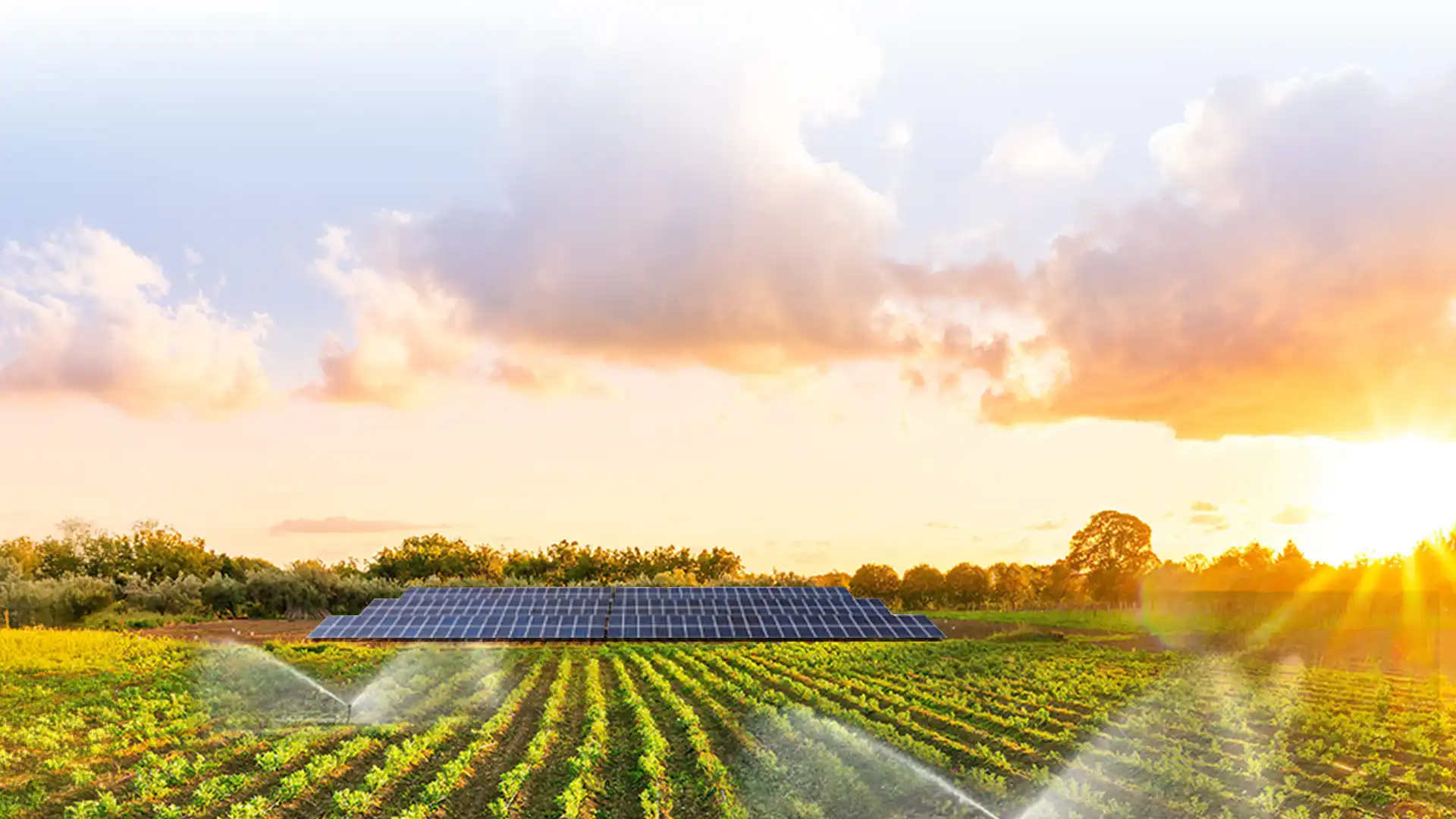 A New Era in Irrigation with AgriFlow Technology
Developed with CW Enerji’s engineering expertise, AgriFlow technology provides high operating voltage from a single panel, enabling fewer connections, simpler installation, and more efficient irrigation throughout the day.
Detailed Review
A New Era in Irrigation with AgriFlow Technology
Developed with CW Enerji’s engineering expertise, AgriFlow technology provides high operating voltage from a single panel, enabling fewer connections, simpler installation, and more efficient irrigation throughout the day.
Detailed Review
 Solar Panels
  Inverters
  CHARGE CONTROLLERS
  SOLAR PACKS
  Solar Equipment
  ENERGY STORAGE SOLUTIONS
  HEATING, COOLING AND HOT WATER
  ELECTRIC VEHICLE CHARGERS
  Solar Lighting Solutions